
Tendon & Joint
Achilles tendinopathy: pain, rehabilitation and shockwave therapy
Understand Achilles tendon symptoms, why rehabilitation matters and questions to ask about shockwave therapy.
What is Achilles tendinopathy?
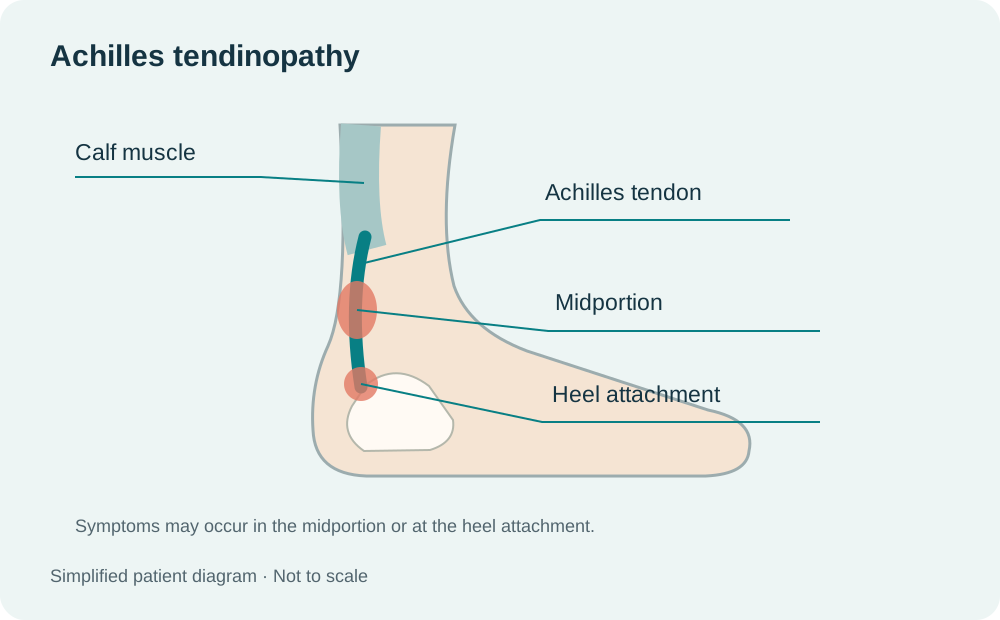
The Achilles tendon connects the calf muscles to the heel. Tendinopathy describes tendon pain and impaired function, sometimes with swelling. It is often called Achilles tendonitis, although that name does not capture every persistent tendon problem.
Recognising the pattern
Symptoms may include stiffness after rest, tenderness and pain during or after activity. Problems can occur where the tendon joins the heel or further up its length. The location matters because assessment and exercise advice can differ.
Assessment and rehabilitation
A clinical examination is often enough to establish the diagnosis; ultrasound or MRI may be used when indicated. Treatment can include reviewing activity, footwear and risk factors, alongside a tailored strengthening programme. Recovery may take months. Follow an individual exercise plan rather than assuming every heel-drop programme is suitable.
Can shockwave therapy help?
ESWT may be considered as part of a treatment discussion. NICE describes the evidence for effectiveness in Achilles tendinopathy as inconsistent and limited. It recommends special arrangements for governance, consent and audit or research. Discuss the uncertainty, discomfort, risks and alternatives before deciding.
Preparing for an enquiry
Contact our shockwave therapy secretary with a summary of your symptoms, previous treatment and any relevant scan reports. Ask what the assessment includes, how rehabilitation will be coordinated and when progress will be reviewed. This guide cannot confirm a diagnosis or treatment suitability.
Speak with the team
For appointments and referral enquiries, call 01223 901005.
Explore the treatment