
Kidney Stones
What is lithotripsy? A patient guide to ESWL
Learn how ESWL treats selected kidney stones and what to ask before your appointment.
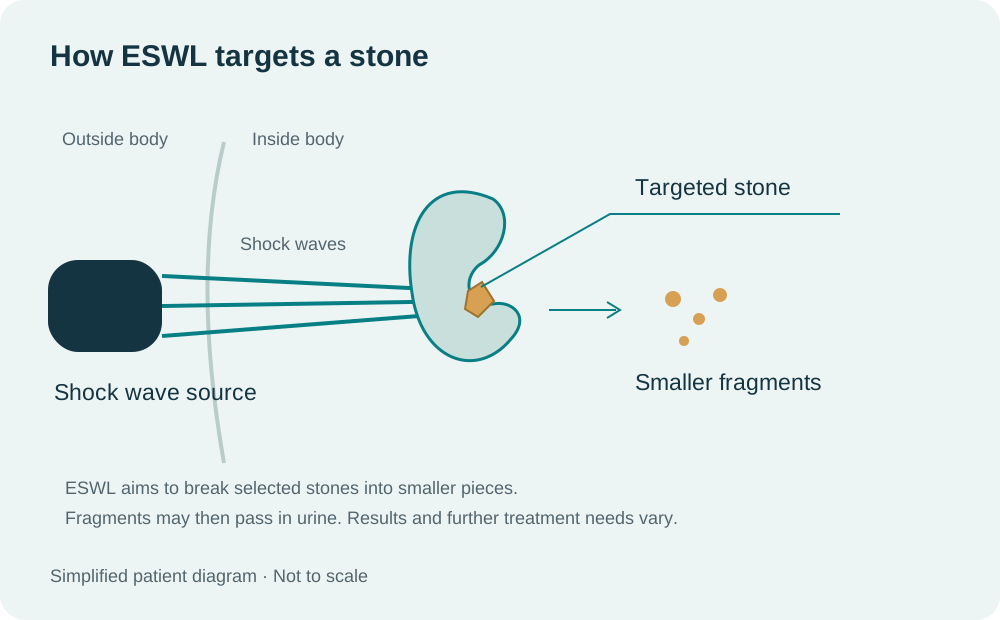
What does ESWL mean?
Extracorporeal shockwave lithotripsy uses focused shockwaves delivered from outside the body to break a urinary stone into smaller fragments. These fragments then need to pass through the urinary tract. Treatment does not involve a skin incision.
Who might be suitable?
ESWL is one option for selected kidney and ureteric stones. Your urologist considers the scan findings and individual clinical factors before recommending it. An alternative procedure may offer a better chance of clearance in your situation. Ask why ESWL is being recommended and what the alternatives involve.
Before and during treatment
Follow the appointment instructions supplied by your treating team. Tell them about all medicines, possible pregnancy, infection symptoms and implanted devices. Do not stop prescribed medicines yourself. Imaging guides targeting; pain relief may be provided, and adults are generally awake.
What happens afterwards?
More than one session may be necessary. Breaking a stone and becoming stone-free are different outcomes: follow-up is needed to assess what remains. Discuss pain relief, expected symptoms, warning signs and whom to contact before leaving. Read the patient information supplied with your appointment.
ESWL in London
The Shockwave Specialists provides its London ESWL service at King Edward VII’s Hospital, 5–10 Beaumont Street. Contact the lithotripsy secretary for appointment and referral enquiries. If using insurance, confirm your policy cover and any required authorisation before treatment.
Speak with the team
For appointments and referral enquiries, call 01603 975170.
Explore the treatment